


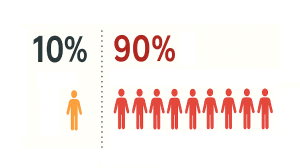
You just sent your latest email and saw a 10% click-through rate. Feels good, right? You’re exceeding industry benchmarks (really!), so it must be a reason to celebrate. But before you pop the champagne, it’s worth understanding why open rates mislead email marketers—because click-through rates can fall into the same trap.
Not so fast. What about the 90% who didn’t click?
For you and others like you, that silent majority represents untapped potential – and, quite frankly, a slow leak in your revenue pipeline. One proven way to start closing that gap is by offering lead magnets that drive real engagement—giving that silent majority a compelling reason to raise their hand. Let’s unpack why high click rates can mask bigger problems, dive into the real reasons people ignore your emails, and share clear, actionable shifts to bring those 90% back into your world.
The Hidden Cost of Celebrating High Click Rates
The 90% Feedback You’re Ignoring
Every unopened email, every unclicked link, is a message. It says, “This doesn’t feel relevant to me.” It might mean your topic is off-target, your tone feels too salesy, or your message simply got buried in a sea of AI-generated noise. Before readers even see your subject line, they decide whether to open based on who sent it—understanding how your sender name affects email open rates is the first skill to master. For a consultant pitching a new services bundle, that feedback could signal you’re talking about solutions before your readers even know they have the problem.
The danger? If you ignore this silent feedback, your brand becomes background noise. Your carefully built email list turns into a source of diminishing returns. Instead of nurturing potential clients, you risk alienating them.
You become… ignorable.
The Erosion of Relevance and Pipeline
Think of your sales funnel as a leaky bucket. Every email that fails to connect lets water pour out. For small business owners, that bucket might already have holes—limited budgets, tight schedules, and inboxes flooded with generic messages from AI tools. If you can’t close those holes, no amount of new leads at the top will fill the bucket.
A slow drip becomes a steady drain. Without action, your list size stays the same or shrinks, and your revenue plateaus. The good news is this leak is fixable once you understand where it’s coming from. In fact, you can resurrect stalled sales through better engagement once you know which gaps to close.
When you hear that a 10% click-through rate is “good,” it can feel like a win. But take a closer look: 90% of your audience didn’t click. For business owners and marketing leaders, that means nine out of every ten prospects didn’t engage, didn’t notice you, or actively tuned you out. Over time, that adds up to lost visibility, eroded trust, and a stalled sales pipeline. And it often starts even earlier than your emails—with attracting leads who actually want to click in the first place.
Imagine you buy a new coffee machine for the office and broadcast a how-to guide to your list. If only one in ten readers follows your link, you’ve missed an opportunity to build deeper relationships with the other nine. Worse yet, those silent subscribers might slowly forget you exist. Instead of patting yourself on the back, it’s time to pay attention to the feedback you’re not hearing.
Why Your Emails Aren’t Getting Clicks
Root Cause 1: Mismatch Between Content and Audience Needs
If your email reads like a brochure for what you want to sell, it misses the point. Your readers won’t care about what your product or service does. They care about what your product or service does FOR THEM. When you talk about random features or generic industry trends, you disconnect – and you’re training your audience that your emails aren’t valuable. See? You become ignorable.
Example: Jane is a consultant offering cybersecurity reviews. She sends a detailed whitepaper on cloud-native threats to a list still struggling with basic password hygiene. Most readers won’t click because the subject feels too advanced. The fix? Align your message to the exact problem your audience cares about right now.
Root Cause 2: Unfriendly Email Design
Your perfect newsletter on desktop can turn into a jumble on a smartphone. Busy decision-makers often skim on their phones while grabbing coffee or during a quick break. If your email looks like a wall of text or a flashy image that never loads, they’ll swipe left and move on – and no, they don’t go back and read it later.
Keep it simple: short paragraphs, large-enough fonts, clear white space, and a visual hierarchy that puts your main point front and center. Avoid heavy graphics and complex layouts. When you design for mobile-first, you make it easy for distracted readers to find – and click – your link.
Root Cause 3: Ineffective Calls to Action
A CTA that says “Click here to learn more” is invisible. One that screams “You won’t believe what happens next” feels like clickbait. The sweet spot lies in clear, credible, curiosity-driven copy: “See the three mistakes costing you thousands” or “Get your free assessment worksheet.” Tell your reader exactly what they get and why it’s worth their click. One often-overlooked culprit is offering too many options at once—learning to reduce choice overload to boost click rates is a methodology that pays off immediately.
And always deliver on your promise. If they expect a checklist, don’t send them to a long sales page. Disappointed readers won’t trust your next invitation. And confused readers don’t take action. They just move on.
Low click-through rates are just the symptom. The real issues lie deeper. Three root causes commonly trip up small business owners and consultants:
Three Practical Shifts to Reclaim the 90%
Shift 1: Laser-Focus Your Topics on One Person
Before typing a word, ask: “Who is this for?” and “What problem are they wrestling with right now?” If you can’t answer in one sentence, your topic is too broad. Writing as if you’re talking to a single decision-maker builds an instant connection. They’ll feel you’re speaking directly to them, even when you hit send to thousands. That’s the personalization framework behind better clicks—and it’s simpler to apply than most people think.
In practice, create a quick persona: name, role, and pain point. Then write your subject line and first sentence addressing that person’s exact struggle.
Shift 2: Design for the Distracted Reader
Think about how your audience checks email – in line for coffee, between meetings, or on a commute. Make your emails scannable: short paragraphs, bullet points, and a clear visual path to your CTA. Use a single column layout, avoid fancy fonts and overuse of images, and prioritize white space.
The goal is to get your core message and button into view within five seconds of opening. When readers don’t have to hunt for value, they’re far more likely to click.
Don’t sacrifice readable and actionable for pretty. (Seriously, I wrote a whole post about that.)
Shift 3: Craft CTAs They Can’t Resist
Your call-to-action (CTA) is the bridge between reading and action. Make it strong: lead with a verb, highlight a clear benefit, and include a hint of curiosity. For example, “Download the Price-Tag Worksheet” spells out exactly what the reader will get. When you place this button or, better yet, hyperlink near the top, you capture clicks from both skimmers and deep readers. And by following through on the promise immediately, you build trust – paving the way for future emails to land more clicks. That trust-building is the foundation of lead nurturing that turns clicks into real connections—the natural next step once your CTAs start working.
Ready to turn that silent 90% into an engaged audience? Make these three shifts today and start sending emails that feel like help, not marketing. Then, when those clicks start coming in, triggered email campaigns make up a well-executed multi-channel content strategy that ensures you’re ready to follow up and deepen the relationship so you don’t let those newly engaged leads go cold.
Final Thoughts
Protect Your Inbox Influence
Your click-through rate is more than a stat – it’s a real-time signal of relevance, clarity, and trust. When you focus on the 90% who aren’t clicking, you not only boost engagement but safeguard the investment you’ve made in your email list.
Ready to put these shifts into action?
Grab your free checklist to increase click-through rates starting with your very next send and watch your pipeline grow. (Click the graphic above.)
Here’s the full video for your viewing pleasure.
Frequently Asked Questions
Why is a 10% email click-through rate not as good as it seems?
Take a closer look: 90% of your audience didn't click. For business owners and marketing leaders, that means nine out of every ten prospects didn't engage, didn't notice you, or actively tuned you out. Over time, that adds up to lost visibility, eroded trust, and a stalled sales pipeline.
Why are people not clicking the links in my emails?
Low click-through rates are just the symptom. The real issues lie deeper. Three root causes commonly trip up small business owners and consultants: mismatch between content and audience needs, unfriendly email design, and ineffective calls to action.
How do I write a call to action that actually gets clicks?
The sweet spot lies in clear, credible, curiosity-driven copy: 'See the three mistakes costing you thousands' or 'Get your free assessment worksheet.' Tell your reader exactly what they get and why it's worth their click. And always deliver on your promise. If they expect a checklist, don't send them to a long sales page.
How should I design emails to get more clicks from mobile readers?
Keep it simple: short paragraphs, large-enough fonts, clear white space, and a visual hierarchy that puts your main point front and center. Avoid heavy graphics and complex layouts. When you design for mobile-first, you make it easy for distracted readers to find — and click — your link.
How do I make my email content feel more relevant to my audience?
Before typing a word, ask: 'Who is this for?' and 'What problem are they wrestling with right now?' If you can't answer in one sentence, your topic is too broad. Writing as if you're talking to a single decision-maker builds an instant connection. In practice, create a quick persona: name, role, and pain point. Then write your subject line and first sentence addressing that person's exact struggle.